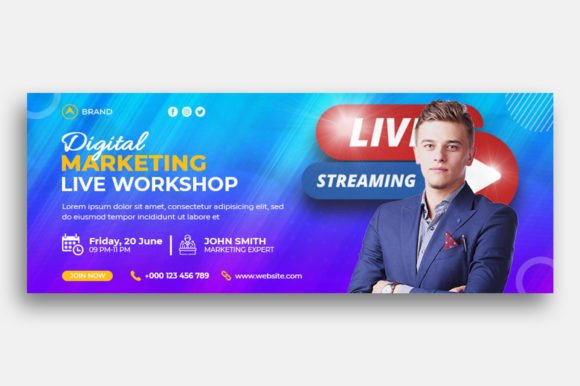
The Ultimate Guide to Creating a Live Streaming Workshop Facebook Cover That Attracts Attendees
When you're hosting a live streaming workshop, every detail of your promotion matters—and your Facebook cover is often the first thing potential attendees see. A well-designed cover image can instantly communicate the value of your workshop, build trust, and encourage clicks and registrations. But what if you're not a professional designer? That's where a clean, easy-to-edit Facebook cover template comes in. In this guide, we'll explore everything you need to know about using a Live Streaming Workshop Facebook Cover template, from understanding the design specifications to editing it in Photoshop, so you can create a polished, professional cover that gets results.
Why Your Facebook Cover Matters for Live Streaming Workshops
Your Facebook cover is prime real estate. It's one of the first visuals people see when they visit your page or event. For a live streaming workshop, this image needs to do several things at once: convey the workshop's topic, establish credibility, create a sense of urgency or excitement, and make your page look professional. A generic cover—or worse, no cover at all—can make your workshop look amateurish and reduce trust. A thoughtfully designed cover, on the other hand, can increase engagement, drive registrations, and set the tone for the entire event.
Think of your cover as the digital storefront for your workshop. When someone lands on your Facebook page, they decide within seconds whether to stick around, explore your content, or sign up. A strong visual hook, combined with clear messaging, can make that decision easy. This is especially important for live streaming workshops, where you're competing for attention in a crowded feed.
Understanding the Template: Easy to Edit and Optimized for Success
The Live Streaming Workshop Facebook Cover template described here is designed with simplicity and flexibility in mind. Let's break down what makes this template a great choice for anyone who wants a professional look without hiring a designer.
Template Features at a Glance
- Easy to edit. You don't need advanced design skills—just a basic grasp of Photoshop.
- Optimized for design at 300 DPI. This ensures your cover looks crisp and clear on screens and in print if needed.
- RGB color mode. Ideal for digital screens, ensuring vibrant and accurate colors.
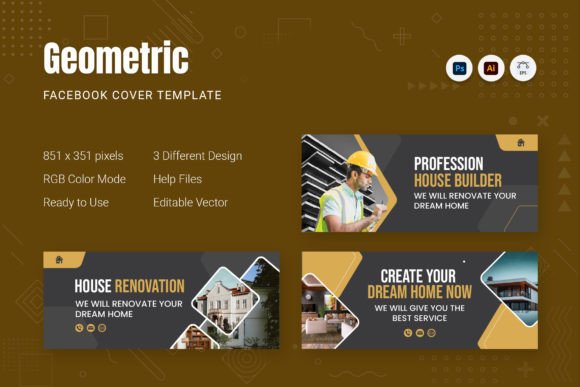
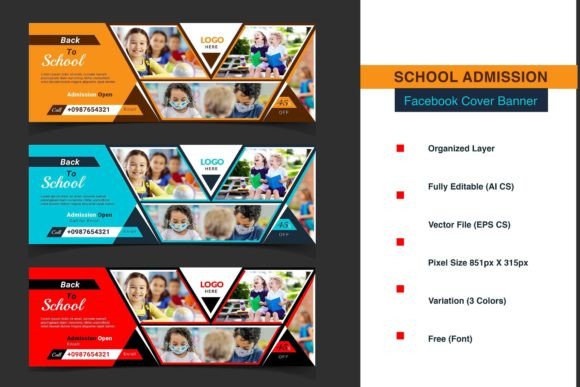
- 820 x 312 pixel dimensions. This is the standard Facebook cover size for personal profiles and pages, so your image will display correctly without being cropped awkwardly.
- 1 PSD file included. The layered Photoshop file makes it easy to swap out text, images, and backgrounds.
- Images are not included. You'll need to supply your own photos or graphics, which gives you complete control over the look and feel.
- Free font use. The template uses a free font, so you won't need to purchase any typefaces.
This combination of features makes the template accessible to beginners while still offering enough flexibility for experienced users to customize it fully.
Key Design Specifications: 820 x 312 Pixels at 300 DPI
You might wonder why the dimensions and resolution matter so much. Let's clarify:
- 820 x 312 pixels is the optimal size for Facebook covers. If you upload an image that's smaller, Facebook will stretch it, causing blurriness. If it's larger, Facebook may compress it, leading to quality loss. Sticking to the recommended size ensures your design looks exactly as intended.
- 300 DPI (dots per inch) is a measure of resolution. While screens typically display at 72 DPI, designing at 300 DPI gives you extra detail and flexibility. If you ever want to use the same design for print materials—like a poster or flyer—you'll have the quality to do so. It also prevents pixelation when zoomed in.
- RGB color mode is standard for digital use. CMYK is for print. Since your cover will be viewed on screens, RGB ensures the colors are vivid and accurate.
By respecting these specifications, you avoid common pitfalls like blurry text, distorted proportions, or off-color graphics.
Step-by-Step Guide to Editing Your Template in Photoshop
If you have basic Photoshop skills, you can customize this template in just a few steps. Here's how to get started:
- Open the PSD file. Double-click the file to open it in Photoshop. You'll see a layered structure with placeholders for text and images.
- Replace the placeholder image. The template likely includes a sample image. To use your own, open your photo, copy it, and paste it into the PSD. Use the Move Tool to position it where you want. You can also use a clipping mask to fit the image into a specific shape or frame.
- Edit the text. Select the Text Tool (T) and click on the placeholder text layers. Type your workshop title, date, time, and any other details. Choose a font that matches your brand—the template uses a free font, but you can switch to any other free or licensed font you prefer.
- Adjust colors and effects. Use layer styles (like gradient overlay, drop shadow, or stroke) to make text stand out against the background. Keep it readable: high contrast between text and background is essential for small screens.
- Check the dimensions. Before saving, make sure your canvas is exactly 820 x 312 pixels. Go to Image > Canvas Size to verify and adjust if needed.
- Save for web. Export your final design as a JPEG or PNG. For Facebook, use JPEG with a quality setting of 80–90% to balance file size and clarity. Name your file clearly, like "Live-Streaming-Workshop-Cover.jpg".
And that's it. In under 15 minutes, you can have a custom cover ready to upload.
Best Practices for Live Streaming Workshop Covers
To make your cover truly effective, go beyond just editing the template. Consider these best practices:
1. Keep It Simple and Focused
Your cover has limited space. Stick to one main visual, a clear headline, and one call-to-action (like "Register Now" or "Join Live"). Avoid cluttering the design with too many elements. White space is your friend.
2. Use High-Quality Images
Since the template doesn't include images, choose high-resolution photos that reflect your workshop's topic. A relevant background image—like a speaker presenting, a classroom setup, or a tech workspace—adds context and appeal. Avoid generic stock photos that feel impersonal.
3. Prioritize Readability
Text on a Facebook cover needs to be legible at small sizes. Use bold, sans-serif fonts for headlines and ensure there's enough contrast between text and background. Avoid placing text over busy areas of an image.
4. Include Key Details
At minimum, your cover should include:
- Workshop title or topic
- Date and time (including time zone)
- A clear call-to-action (CTA) like "Register Free" or "Join Live Now"
- Your brand or logo (optional but recommended)
5. Test on Mobile
Most Facebook users browse on mobile. Facebook's cover images are cropped differently on mobile versus desktop. Make sure your most important elements—especially the text and CTA—fall within the safe zone (the center area that's always visible). Use Facebook's cover preview tool or check on your phone before publishing.
Common Mistakes to Avoid
Even with a great template, certain missteps can hurt your cover's effectiveness. Here are a few to watch out for:
- Using too many fonts. Stick to one or two fonts maximum. Too many typefaces look messy and amateurish.
- Ignoring the safe zone. Don't place critical text near the edges, as it may get cropped on mobile or covered by profile picture elements.
- Low-resolution images. Blurry or pixelated images damage credibility. Always use high-res photos.
- Missing a clear CTA. If viewers don't know what to do next, they'll scroll past. Make your call-to-action obvious.
- Overcomplicating the design. More elements don't mean better communication. Aim for clarity and impact.
How This Template Fits into Modern Content Promotion
Live streaming workshops have exploded in popularity, especially in education, business training, creative skills, and technology. A polished Facebook cover helps you stand out in a world where anyone can host a stream. It signals professionalism and preparedness, which in turn builds trust with your audience. Whether you're a coach, a marketer, a teacher, or a content creator, this template gives you a foundation to create a consistent brand presence across your social media.
Moreover, using a template saves time and reduces design anxiety. Instead of starting from a blank canvas, you can focus on customizing the message and visuals that matter most to your workshop. And because the template is fully layered in PSD format, you can reuse it for future events by simply swapping out text and images—making it a long-term asset for your content strategy.
Conclusion: Turn a Simple Template into a Powerful Promotion Tool
A Live Streaming Workshop Facebook Cover template is more than just a pretty image—it's a strategic tool for attracting attendees, building credibility, and making your event look professional from the first glance. By understanding the design specifications (820 x 312 pixels at 300 DPI, RGB mode), knowing how to edit the PSD file in Photoshop, and following best practices for layout and messaging, you can create a cover that drives results. Even if you're a beginner, the process is straightforward: open, replace, edit, save, and upload. With a clean template and a little attention to detail, your next live streaming workshop will have the visual presence it deserves.
Remember, the goal is not just to fill a space on your Facebook page—it's to invite viewers into an experience. Make that invitation count.