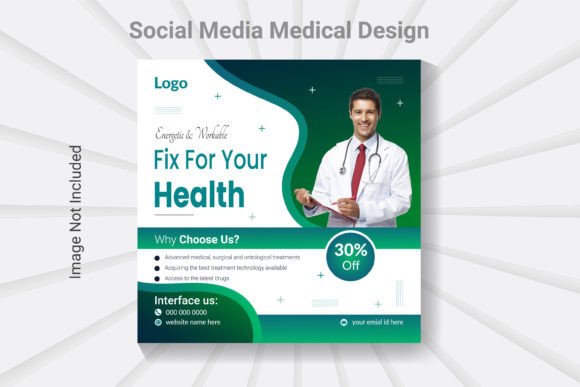
Evaluating Social Media Post Medical Templates for Healthcare Marketing
When you need to produce professional, on-brand graphics for a healthcare practice, clinic, or wellness service, the right design resource can save hours of work. Among the many options available, Social Media Post Medical templates offer a structured solution for creating consistent visual content. But what does this specific package include, and how does it measure up against other approaches like custom design or subscription-based platforms? This article breaks down the core features, practical strengths, and tradeoffs so you can decide if these editable files fit your workflow.
What Social Media Post Medical Templates Actually Deliver
At its simplest, Social Media Post Medical refers to a set of design files built specifically for healthcare-related social media graphics. The package typically includes an Adobe Illustrator (AI) file, an Encapsulated PostScript (EPS) file, and a high-resolution JPEG preview. These files are constructed with a 500x500 pixel square format in RGB color mode at 300 DPI—ideal for platforms like Instagram, Facebook, or LinkedIn profile images. Everything is well-layered and organized, meaning text, fonts, colors, and graphic elements are fully editable as long as you are using Adobe Illustrator CS6 or a newer version. Free fonts are used, so there is no extra licensing cost to worry about.
What makes this approach distinct from a simple stock image or a template from a web-based editor is the level of control. Because the design is fully layered in Illustrator, you can adjust every component individually. For example, you might swap out a headline font, change the background color to match your brand palette, or reposition elements without breaking the layout. This flexibility is particularly valuable when you need to produce a series of posts that follow a cohesive medical theme—such as appointment reminders, health tips, or service highlights—while maintaining a consistent visual identity.
Key Features That Set It Apart
Understanding the specific features of Social Media Post Medical helps clarify where it excels compared to other design resources. Here are the main differentiators:
- Easy customizability: Because the AI and EPS files are well-organized, you can quickly modify text, swap colors, and adjust typography without starting from scratch. This is ideal if you have basic Illustrator skills but lack the time to design original graphics every week.
- High resolution and color precision: With 300 DPI and RGB color space, the output is crisp for digital screens. The resolution ensures that even when the image is viewed on high-density displays, text and graphics remain sharp.
- Layered structure: Each element sits on its own layer, making it easy to hide, edit, or delete specific components. This organization reduces the risk of accidentally moving or altering unintended parts of the design.
- Free fonts: Using free, commonly available fonts means you do not have to purchase additional typefaces for your branding. This lowers the upfront cost and simplifies collaboration with other team members.
- Compatible with Adobe Illustrator CS6 and above: You don’t need the latest subscription version to work with these files. Legacy users can still open and edit the templates, which is helpful for small practices or independent professionals who may not have the newest software.
It is also worth noting what is not included: the package does not contain stock photos or raster images. All graphic elements are vector-based or built from shapes and text, so you will need to supply your own imagery if your posts require photographs or complex illustrations.
How It Compares to Alternative Design Routes
When evaluating Social Media Post Medical against other ways to produce healthcare social media graphics, several comparison points emerge. One common alternative is hiring a freelance designer for each post. While that route offers complete customization and a human touch, it can become costly and slow, especially if you need frequent updates or multiple variations. Template-based solutions like this one give you a repeatable starting point that you can adapt yourself, reducing both cost and turnaround time.
Another popular option is using a web-based design platform such as Canva or Adobe Express. These tools offer drag-and-drop simplicity and often include built-in stock imagery. However, they typically operate on a subscription model, and advanced customization may be locked behind a paywall. Social Media Post Medical files, by contrast, are a one-time purchase that you own outright. You are not dependent on an internet connection or a monthly renewal. The tradeoff is that you need to install and be comfortable with desktop software—Adobe Illustrator—which has a steeper learning curve than a browser-based editor.
There is also the option of using pre-made medical graphics from stock marketplaces that offer fully flattened JPEGs or low-resolution files. Those options are often cheaper but lack editability. Whenever you need to change a date, update a name, or adjust the color, you are stuck with the original static image. With Social Media Post Medical, the layered structure means you can make those edits in minutes rather than starting over.
When Social Media Post Medical Works Best
This template package fits particularly well in a few common scenarios. If you run a small medical practice or a health coaching business and have someone on staff who knows basic Adobe Illustrator, these files can become a reliable library for daily or weekly social media posts. The square 500x500 pixel format is versatile enough for Instagram grids, Facebook banners, and LinkedIn articles about healthcare topics.
It is also a strong choice for marketing teams that need to maintain brand consistency across multiple practitioners or locations. Because all templates are based on the same layered structure, you can create a master file with your logo and brand colors, then duplicate it for each specific post. This ensures that every graphic feels part of a unified campaign rather than a collection of unrelated images.
Another ideal use case is educational content. Medical professionals often share infographics, tips, or quick facts on social media. The editable text fields let you swap out the content for each new topic while keeping the same layout, saving significant design time over the course of a month or quarter.
Potential Limitations to Consider
No single resource works for everyone, and Social Media Post Medical has clear boundaries. The most obvious limitation is the reliance on Adobe Illustrator CS6 or higher. If your team does not have access to this software, the files are effectively unusable. While you could technically convert the EPS to a different format, you lose the layered editability that makes these templates valuable.
Additionally, because images are not included, you must source your own photography or illustrations. For many medical topics, finding appropriate, rights-cleared stock photos can be time-consuming. If you need graphics that rely heavily on realistic imagery (such as before-and-after photos, equipment shots, or patient interactions), you will need to combine the template with an external image library, adding another step to your workflow.
The square 500x500 pixel format is another constraint. While it is perfect for many social media profiles and posts, it will not work directly for stories (which are vertical), banners (which are rectangular), or print materials. You would need to adapt the layout for different aspect ratios, which may require additional manual work.
Finally, there is the question of originality. Because these are pre-made templates, other users may purchase the same set and produce similar-looking graphics. If your brand emphasizes highly distinctive or custom visuals, you may prefer to commission original designs rather than rely on a template. However, given the extensive editability—you can change colors, fonts, and layout elements significantly—the risk of looking identical to others is relatively low if you invest a little effort in customization.
Making an Informed Decision
Choosing whether Social Media Post Medical is right for you comes down to your existing resources and your content creation volume. If you already own Adobe Illustrator and have someone who can operate it, these templates offer a cost-effective way to produce a steady stream of on-brand medical social media graphics. The layered organization, high resolution, and editable text make them a practical choice for efficiency without sacrificing quality.
If, on the other hand, you lack design software or prefer a more hands-off approach like outsourcing to a designer, the upfront purchase may not save you as much time. Similarly, if your social media strategy demands a wide variety of aspect ratios or heavy reliance on stock photos, you may need to supplement the template with additional resources.
To get the most from this style of template, plan your content in batches. Open the AI file, make all your color and font adjustments to match your brand, and then duplicate the artboard for each post. Swap in your text and any vector graphics you have. Over time, you will build a library of variations that feel distinct while remaining visually consistent. This workflow is especially effective for recurring content like “Tip Tuesday” or “Team Spotlight” features in a medical context.
Ultimately, Social Media Post Medical serves as a middle ground between fully custom design and static pre-made graphics. It gives you enough control to tailor the visuals to your specific message while reducing the repetitive work of building each layout from scratch. For many healthcare marketers, that balance makes it a valuable part of their design toolkit.